How Do Stock Exchanges Work?
Stock exchanges are particular networkswithin the broader stock market where stockbrokers meet. Exchanges provide companies with the opportunity to grow and flourish around the world.
Bursa Malaysia Exchange
Bursa Malaysia is the stock exchange in Malaysia, providing a platform for companies to trade their stocks and attract investors. Similar toother stock exchanges, Bursa Malaysia is a network where stockbrokers meet to facilitate buying and selling of securities.
Bursa Malaysia was established in 1973 and has grown to become one of the key stock exchanges in Southeast Asia. It plays a vital role in the Malaysian economy, providing companies with opportunities to grow and expand.
The exchange lists a diverse range of companies, including blue-chip corporations and smaller companies. Bursa Malaysia itself is a publicly traded company. They set their own listing requirements for companies, which may include factors such as the company's financial performance, market capitalization, and corporate governance standards. These rules are designed to ensure fair and transparent trading practices and maintain investor confidence.
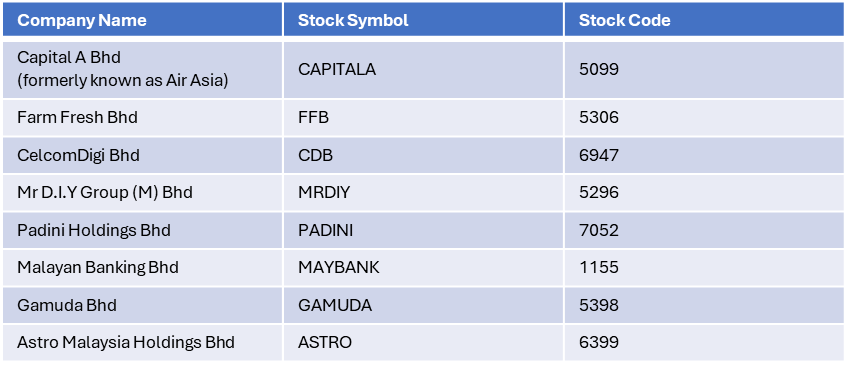
Some of the familiar brands that are listed on the Bursa Malaysia exchange;
Nasdaq and New York Stock Exchange
Nasdaq is the first electronic stock exchange, was founded in 1971. With a focus on technology and innovation, the Nasdaq grew to become the most active exchange in the U.S., home to many of the companies—think Google, Amazon, Netflix and Facebook—that have literally changed the way we live. On any given day, more than 2 billion shares are traded on the Nasdaq, from more than 4,000 listings with a market value of approximately $12 trillion.
Downtown from Nasdaq's Times Square headquarters sits the New York Stock Exchange, which was founded in 1792. Unlike Nasdaq, the New York Stock Exchange (NYSE) is only partially electronic: some business is still conducted every day by human traders on the floor.
Both Nasdaq and the NYSE are themselves publicly traded companies—on their own exchanges.
Every stock exchange writes its own rules for corporations that want to trade their stock there. These rules can include how long the company has existed, how many shares are held publicly and how much net income the company reports. Because the Nasdaq is open to listing smaller, newer companies than the NYSE, most U.S. IPOs are launched there. At the same time, each exchange must follow rules set by a larger governing body—in the United States, that would be the Securities and Exchange Commission (SEC).
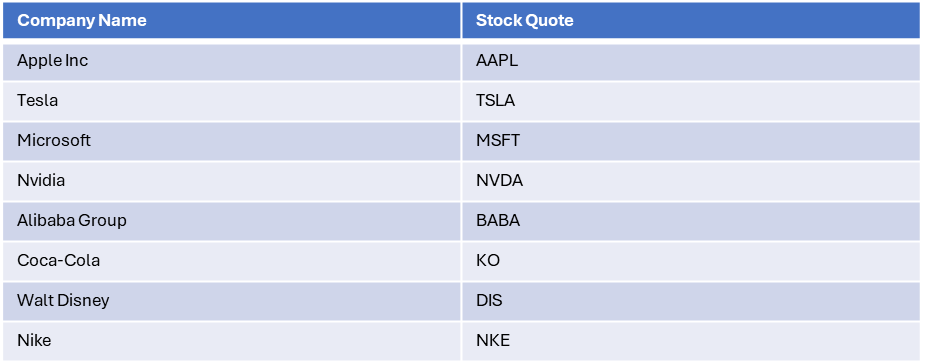
Some of the familiar brands that are listed on the Nasdaq and NYSE;